Tea in Thailand: the untold story of warrior farmers
If you type in ‘Thai tea’ on Google, chances are you will see pictures of an orange drink with ice and milk. But concluding that’s all there is to Thai tea would be a mistake. Aside from the popular drink known as Thai tea — a sweet and aromatized iced tea — Thailand has its own unique tea culture. The northern regions are producing world-class loose leaf teas under the radar of many Western aficionados, and the history of how this came to be is filled with migrations, conflicts, ancient traditions, and modern reforms.
As a Canadian teaware artist and tea geek who has lived in Thailand for three years, I had the chance to visit a lot of tea plantations in northern Thailand, talk to farmers, taste their teas, and read about the cultural and historical background of local tea culture. It is not very well-known abroad, and I became increasingly fascinated with it as I was discovering its origins and influences, while also realising the quality of the terroir and its production.
Wild tea trees grew for millennia in the Golden Triangle region (where Myanmar, Thailand and Laos intersect), and for a long time local ethnic groups have crafted simple roasted green teas, or tea leaf salads. But the more modern history of tea cultivation in the region has its roots in war, migration, and politics.
A Chinese origin
Let us start with the Chinese Civil War. From 1927 to 1949, Mao Zedong and the Chinese Communist Party opposed the military general Chiang Kai-shek and the Kuomintang (KMT), also known as the Nationalist Party of China. The Democratic Republic was in its infancy, just following the fall of the last dynasty under forced resignation. Chiang was made president, and hopes were high for democracy and social reforms. The country was lagging in terms of industrial and economical evolution, and people were ready to step away from a tradition of isolationism that had kept the country cut off from the evolution of the Western world, and of neighbouring Japan.
But even more pressing than reforms were the conflicts with Japanese forces occupying Manchuria and major coastline cities, and the Communist rebels organising in the countryside.
Between World War I and World War II, Japan was in an expansionist frenzy, and Chiang was unable to contain them. They had gained control over Manchuria (the northeastern region bordering the Korean peninsula) and key coastal cities, namely Nanjing and Peking. Parallel to this external threat, China was inwardly divided ideologically between more nationalist rhetoric and the seductive communist ideology that had already shaped its massive neighbour, the Soviet Union.
It took the bombing of Hiroshima and Nagasaki in 1945, and consequently Japan’s surrender, for China to regain possession of its coast. When the Japanese forces abandoned their posts in the occupied Chinese cities, the government had to reintegrate these cities into mainland China. This was a delicate task, though, and Mao, covertly and patiently fighting for Chiang’s power, cleverly left it to his rival without interfering — despite having, himself, an important armed force in the region. The general’s forces were thus let loose in the retaken cities.
But corruption, land grabs, and false accusation of locals sympathising with the Japanese occupants to justify eviction ran rampant. The already traumatised population that had lived through atrocities such as the Nanjing Massacre was now freed from the occupants, but prey to inflation and social chaos, and Chiang lost a lot of trust in that period — trust that was transferred, slowly but surely, into the hands of Mao and his promises to redistribute lands from the wealthy to the poor. When the Red Army finally made its move from the countryside to the cities, they faced little resistance. Despite their low numbers, the ground was fertile for their ideological positions and they gained sympathisers quickly without having to fight much.
Chiang and his loyalists finally fled Peking, where they had retreated, and embarked on ships to Taiwan. China was communist and KMT fighters were chased down and persecuted. Those who couldn’t flee with their general found themselves stranded in Myanmar, Laos, Thailand, and Vietnam.
Royal Project
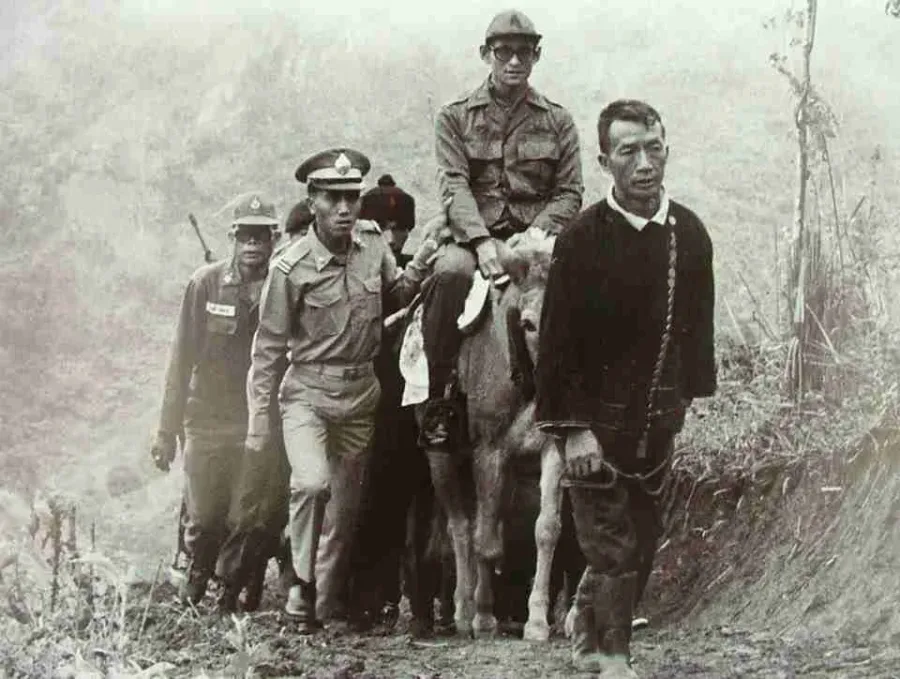
King Bhumibol Adulyadej of Thailand saw a unique opportunity in welcoming the stranded KMT fighters to northern Thailand. Cold War tensions had begun to pressure the whole planet in the 1950s, and Thailand, bordering Laos and Myanmar, was threatened by the spread of communism. Thailand had always played its cards well in being neutral and open to trades and avoiding wars, and the beloved King Bhumibol was keeping the tradition going. By offering refuge to the KMT soldiers, the Thai government effectively created a buffer against communist insurgencies along the northern border, without having to side openly. In exchange, these Chinese soldiers and their families would integrate into Thai society by working the land.
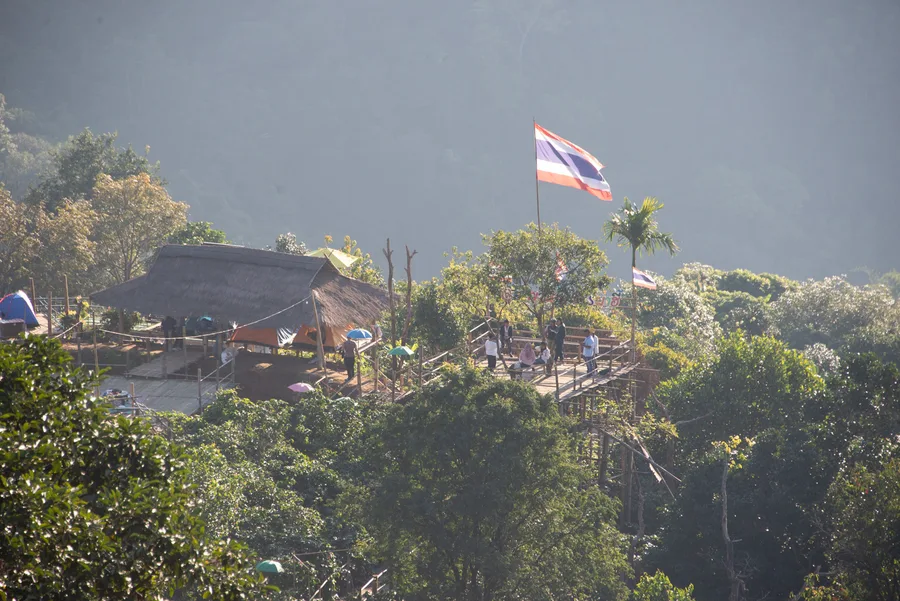
This move was both practical and symbolic. It provided a solution for the displaced KMT soldiers, many of whom had little chance of returning to mainland China, while also strengthening Thailand’s defence against communist infiltration from neighbouring countries. Thus, the KMT forces and their descendants were allowed to settle in remote regions like Doi Mae Salong, a mountainous area in Chiang Rai province, and were granted Thai citizenship in return for their loyalty and service in patrolling the borders.
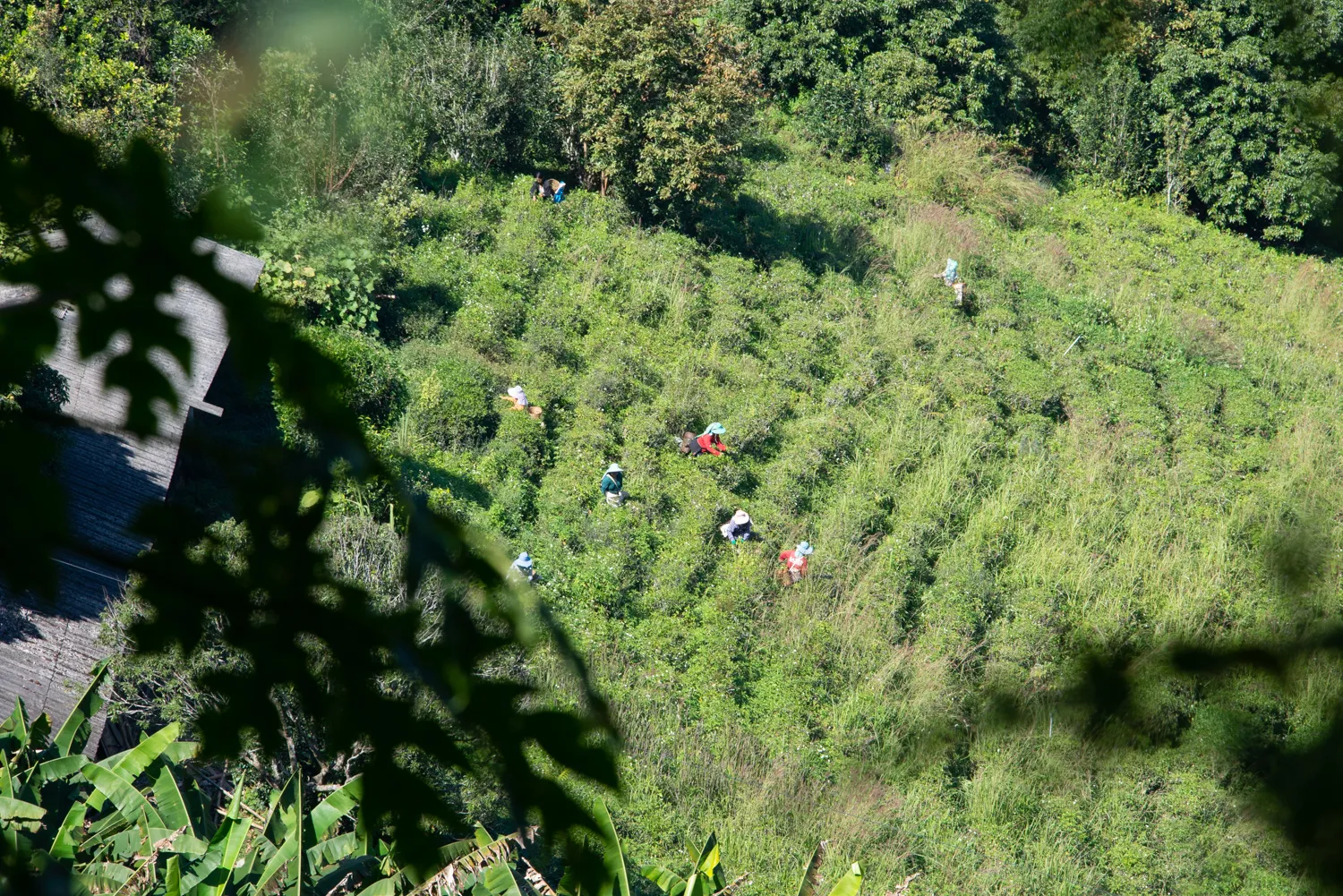
For these former soldiers, many of whom had left behind rural farming communities in southern China, their new life in northern Thailand naturally shifted back to agriculture. The fertile hills of northern Thailand, with their high altitudes and cooler climate, were well-suited for tea cultivation — a skill many of the KMT refugees were already familiar with. The steep, mist-covered hills and rich volcanic soil provided the perfect environment for cultivating high-quality tea. As they sought to rebuild their lives, the Chinese immigrants turned mainly to tea farming as a means of economic survival.
It is worth noting, though, that tea was not the only popular crop. The cultivation of poppies, for the production of opium, was thriving in the 1960s and 1970s. It was thanks to the Royal Project, a charitable initiative led by the relentless King Bhumibol, that tea production was emphasised and promoted in an effort to counter the allure of drug production and trade.
It is worth noting that the Chinese tea culture took a significant hit after Mao won the country. For a decade, the reforms he encouraged and that were brutally enforced by a zealous youth movement caused damage to every ancient tradition in China. Everything that represented the old ways of the people was seen as archaic and condamnable. Teahouses were destroyed and tea farmers forced to abandon their craft. Since then, China has found a way to reintegrate what made its past unique into its modernisation, but for a time following the Chinese Civil War, tea cultivation was more active in neighbouring countries such as Taiwan and Thailand than in China itself.
A Taiwanese influence
The introduction of tea farming in northern Thailand had strong parallels with Taiwan, which also saw an influx of Chinese immigrants after Chiang’s defeat. Like Taiwan, Thailand’s tea culture drew heavily from Chinese tea traditions, particularly from Yunnan province. Many of the same tea varieties, including the wild Assamica, but also several wulong varietals, were cultivated in both regions, leading to a shared specialty in green wulongs in Taiwan and northern Thailand.
Furthermore, government initiatives included inviting tea experts from Taiwan to come and teach in Doi Mae Salong, where tea cultivation was still rudimentary compared with Taiwan’s explorations and advancements. Some Taiwanese farmers even permanently settled in Thailand in a second wave of foreign settlement. Because the farmers in this area had learned from Taiwanese experts, the Doi Mae Salong production became more similar to that of Taiwan, which also propelled the demand for such wulongs.
When I first travelled in Mae Salong, I was very surprised to find Xin Shuan wulongs as milky as the ones I knew from Taiwan, or Bai Hao wulongs of the same explosive honey fragrance as the famous Taiwanese equivalent. This wulong style made from the Qing Xin cultivar could be achieved in Mae Salong as well as in Taiwan, because both environments host the same insect that bites its leaves and creates the tea’s signature fragrance. The Ruby T18 cultivar, another one usually associated purely with Taiwan, is also present on the plantations of northern Thailand.
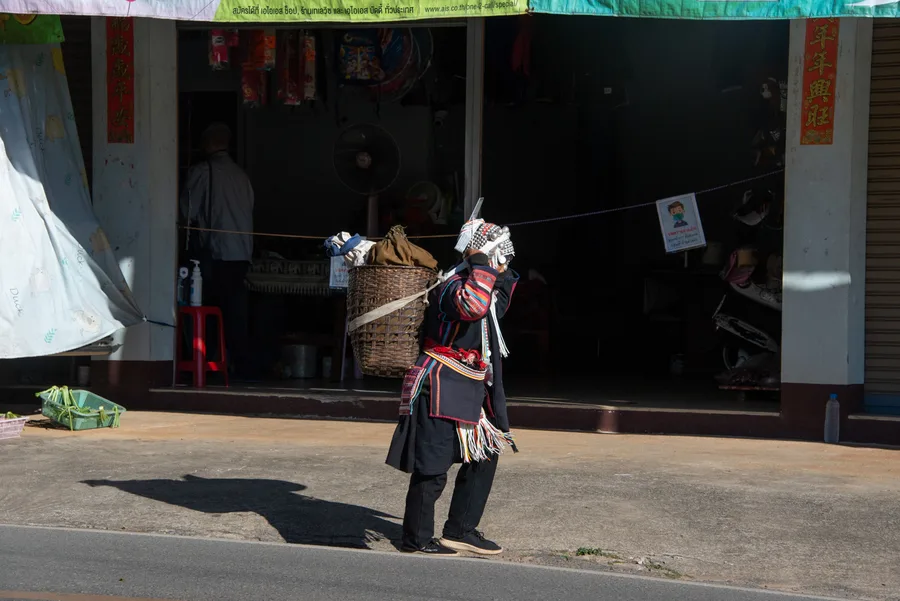
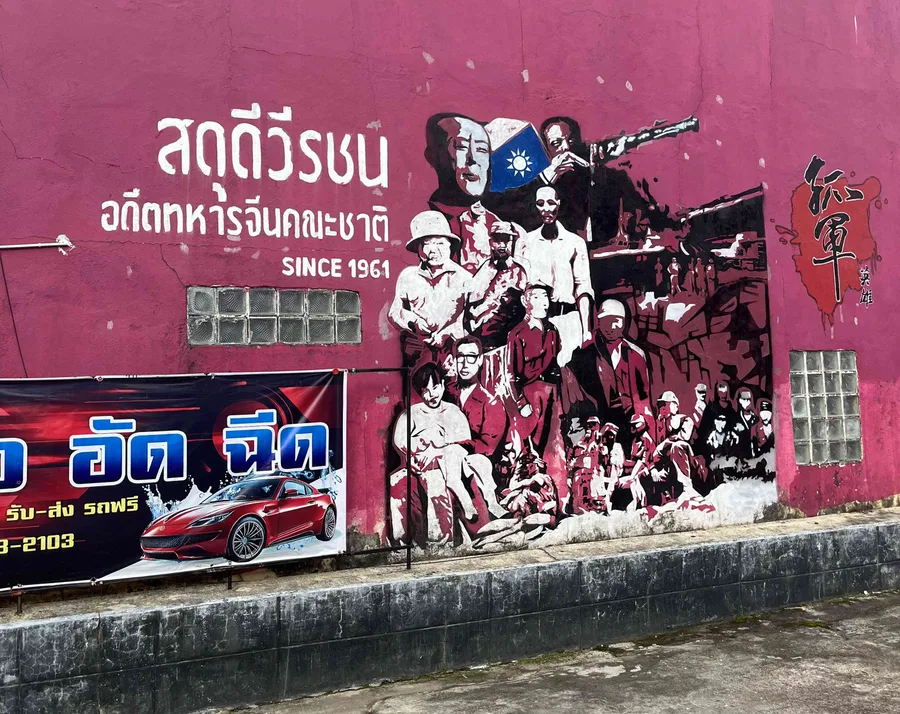
Today, Doi Mae Salong is a quiet and serene region where water buffalo cross the roads, children play barefoot, and small villages dot the hills. The town of Mae Salong is where most of the former Chinese migrants were established. The walls of their old houses feature frescoes depicting battles against communism; visual memories of Chiang. Teahouses punctuate the landscape. Mandarin and Thai are spoken equally.
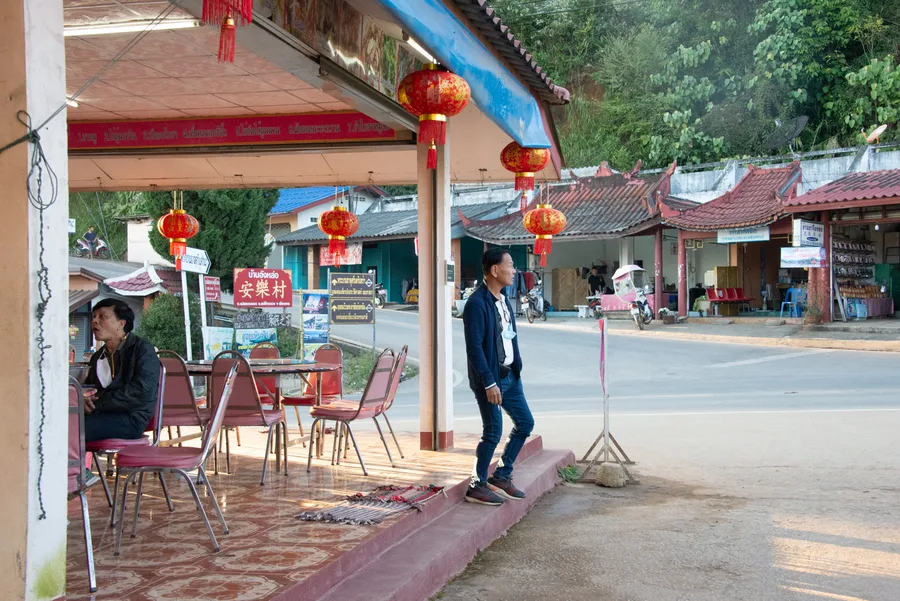
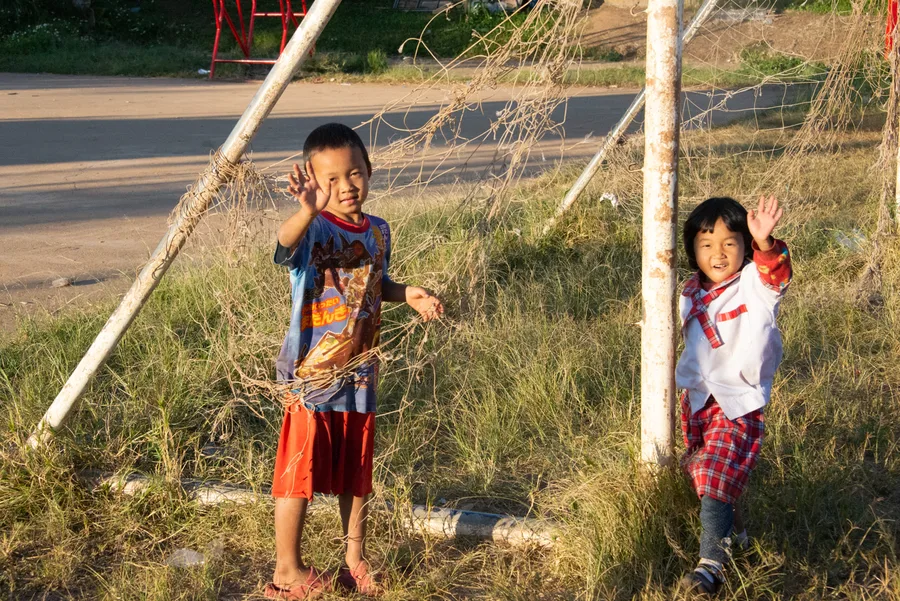
Aside from the epicentre of immigration that is Doi Mae Salong, other communities influenced by Chinese settlers are found around Chiang Rai — notably in Doi Wawee, where the emphasis is on the making of pu’er, and farther east, where Ban Rak Thai is the best example of Chinese influence. A little village around a lake, nestled in the mountains bordering Myanmar. Tea fields, Chinese restaurants and tea houses, pagodas drifting on the lake, mist passing by… It is a ‘little China’ for local Thai tourism. Far from China and far from Taiwan, but you can find there local Dong Ding, Tie Guan Yin or Si Ji Chun wulongs.
It is no surprise then that cultivation techniques, processing methods, and even the specific cultivars planted in the hills of northern Thailand often mirror those found in Taiwan, since both have their roots in mainland China, and shared a direct connection in the 1980s thanks to the Royal Project’s initiatives.
Tea culture
Despite its great potential, tea culture in Thailand is still marginal. Most Thai love their coffee, a crop and culture with a high level of sophistication there. In fact, I have never been into a country where pristine new coffee shops appear everywhere as often as they do here.
Most of the tea produced in the northern mountains is for local consumption or exportation to China. Yunnan province has a lot of tea processing facilities, notably for pu’er production, but prices for local leaves can be extremely high. Thai leaves, coming from a very similar terroir but less hyped on the tea markets, are a less expensive alternative.
Thai tea culture may not have the global recognition of regions like China or Taiwan, but it is nevertheless producing top-class teas. I bought Thai Bai Hao wulongs as good — to my taste — as competition grades from Taiwan, for a quarter of the price. And I have tasted white teas, black teas, and green wulongs here that would easily rival famous Chinese styles.
The local culture’s story is intertwined with migrations, politics, and cultural blending. This history is a testament to the resilience of people displaced by war and political shifts, and their ability to adapt by turning to tea farming as a means of survival and identity preservation. As Thailand’s tea industry continues to grow, both in terms of quality and international recognition, it stands as a reminder that tea is more than just a beverage — it’s a living connection to the past, to the land, to an ancient craft of refinement, and to the people who cultivate it.