ARAKSA - to preserve
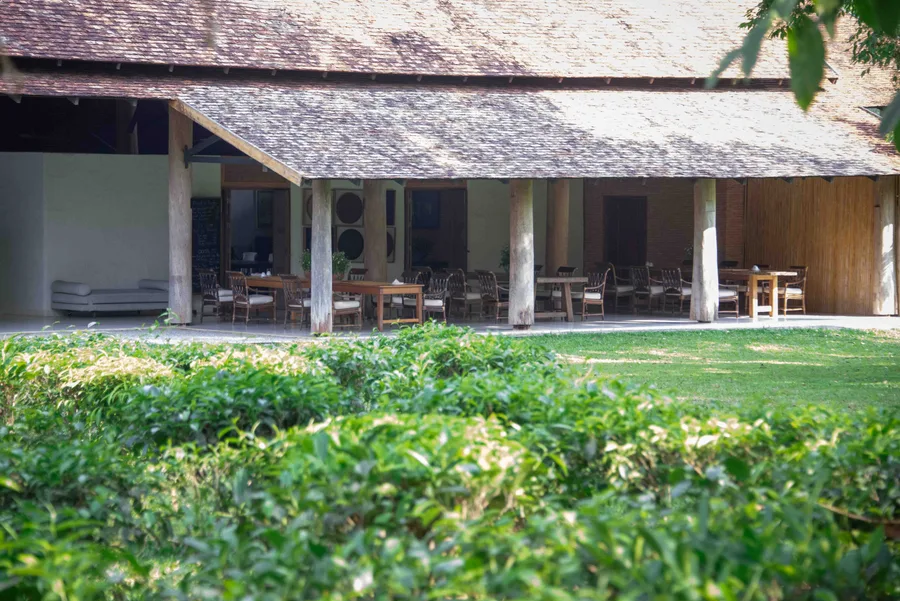
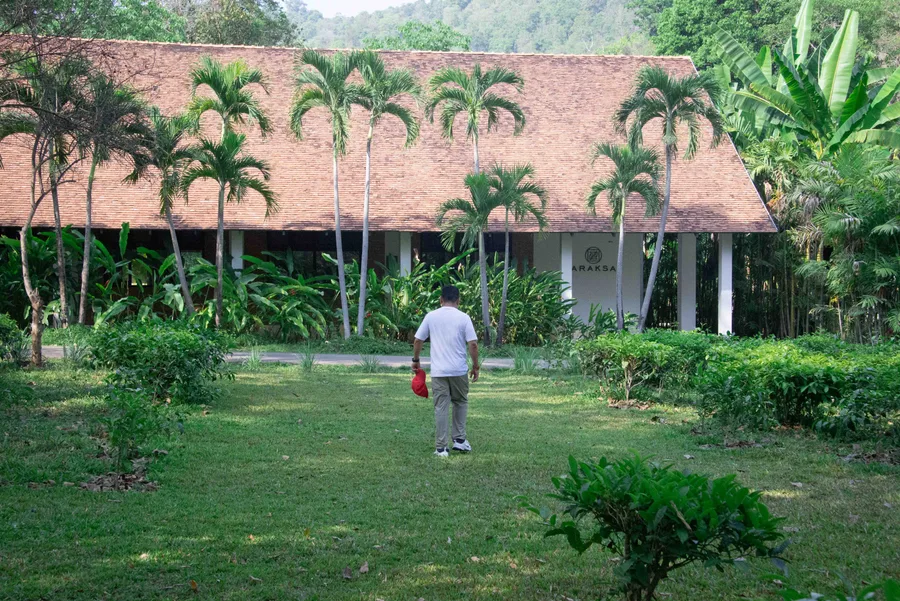
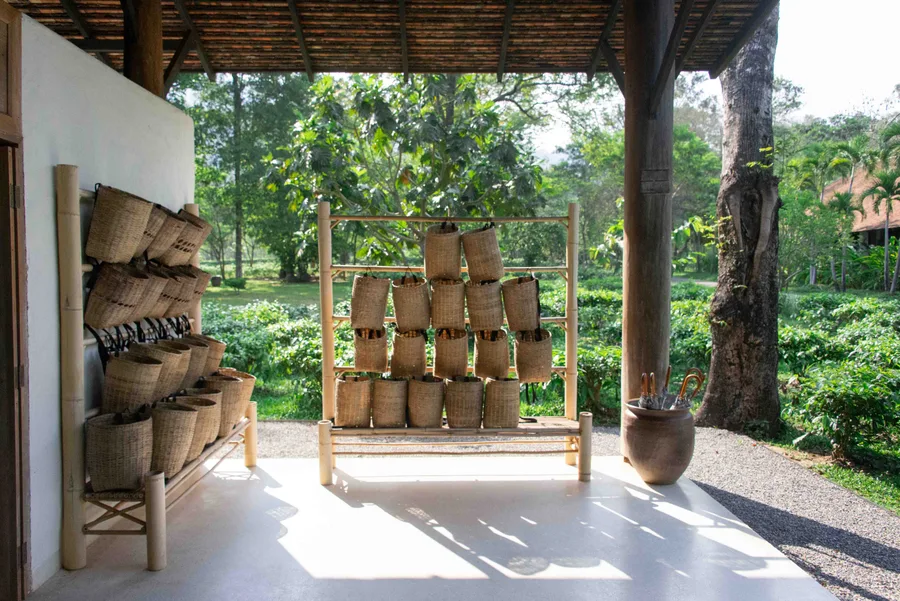
Nestled in a lush valley north of Chiang Mai, between rivers and hills and elephant sanctuaries, sits the tea estate Araksa: a Sanskrit name meaning “to preserve”. I came across this place years ago while exploring the tea plantations of Thailand. To me, it is one of the prettiest of them all, with flower bushes and tall trees throughout the plantation, and a modern and rustic teahouse in the middle. Its origins are unique: This bucolic estate is born from Indian and British expertise on one side, courtesy of Raju from Darjeeling, and from the local know-how of the eco-conscious entrepreneur Anne Chananya.
To understand this fusion, I ventured to Araksa to meet with Raju, the head of production, and Anne, the founder. What I discovered was a story of vision, risk-taking, and unlikely cross-cultural fusion that has quietly transformed a patch of abandoned trees in the Thai jungle into an award-winning tea estate.
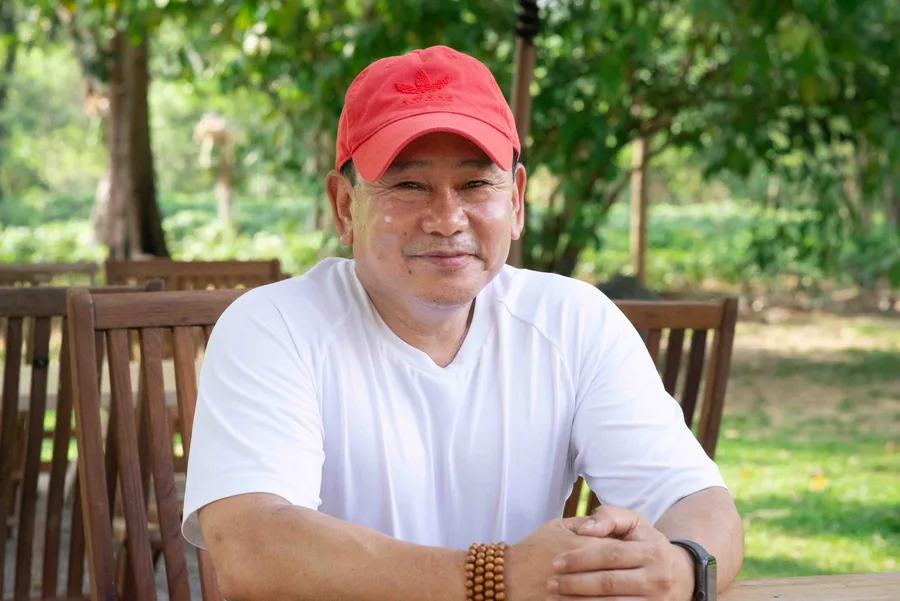
Raju
Robin: Tell me about how you met Kun (respectul prefix in thai) Anne in Darjeeling and what made you say yes to running their newly acquired estate here.
Raju: It was in 2016. I was working as a deputy manager at Glenmont Tea Estate in Darjeeling, which produces some of the world’s best teas. On that particular day, the manager was on leave, so I had to assume the full manager position temporarily.
I was informed that VIP guests from Thailand wanted a tea tour, which managers conduct for special visitors. I took them around the factory and explained the process. Afterward, they mentioned they had a small tea farm in Thailand and were looking for someone to work with them.
I casually said, “Sure why not?” I wasn’t serious at the time—it was just informal conversation.
Later that day, they called me to their room and showed me pictures of their tea farm. It looked completely different from Darjeeling’s precise, systematic, British-style gardens. Their plantation had been abandoned for many years and had grown wild. We exchanged contact information, and they later invited me to Thailand.
Robin: So they really wanted you to come.
Raju: Yes. They sent me tickets, but I actually missed my first flight. I think part of me wasn’t taking it seriously yet. But they sent a second ticket, and I finally came to Thailand in April of 2016.
When I saw the plantation, I initially decided not to take the job. In tea, you need to work very hard, and there I would have to start from zero. The estate was completely abandoned—like going through an Amazon forest with overgrown trees everywhere.
In India, tea managers live in well-furnished bungalows. We’re like bosses—we give orders, everything is done for us. In the evenings, we relax, drink tea, go to clubs, and enjoy ourselves.
Robin: What was the appeal of coming here to start from scratch in the jungle, away from your family?
Raju: When I went back to India and discussed it with my family, they actually encouraged me. In Darjeeling, even if I made the best teas in the world, I wouldn’t be recognized personally. Glenmont has been making the best tea for centuries—managers come and go, but Glenmont still makes the best tea.
I thought if I came here and became successful, I could make a name for myself. In Darjeeling, making high-quality tea is regular—everyone does it. The challenge drew me in. And I have to say… I had a gut feeling.
In August 2016, I decided to come here, work hard, and make a name for myself. But the challenges were immense.
Robin: The environment is very different from Darjeeling, right?
Raju: Yes, totally different. Much warmer and with different trees. For tea production, everything works against you here. We’re at very low elevation—just 520 meters. We don’t get rainfall throughout the year, only during specific periods. In Darjeeling, we get occasional rains even in the off-season.
Even tea scientists told me I was making a “suicidal move.” They said at 520 meters elevation, you cannot make good teas.
Robin: Just so people understand the difference—elevation creates conditions where tea struggles to grow, resulting in less leaf material but more aromatic oils, producing a more fragrant tea, right?
Raju: Exactly. In tea, it’s established that as elevation increases, quality improves but volume decreases. At lower elevations, quality decreases while volume increases. The main factor at high elevation is the morning dew on the tea leaves, which is crucial for quality—it enhances the enzymes in the tea. We don’t get dew here at low elevation.
Also, the tea varieties that thrive in high elevations—mostly clonal plants and Chinese tea bushes—don’t survive well in low elevations. The teas in Darjeeling originally came from China’s high mountains.
What makes Darjeeling tea special is that most gardens face the mountain. In the morning, cold air blows from the mountain, bringing moisture that sweeps across the plantations. This enhances the quality dramatically. Even in Nepal, at the same elevation with similar soil and temperature, the tea isn’t the same because the plantations don’t face the mountain.
Here in Thailand, we have none of these advantages. We’re in a valley at 520 meters with Assam tea plants, which are known for volume, not quality.
Robin: When you arrived, what was the first thing you did to tackle the challenge?
Raju: Cutting the overgrown tea trees. They had been abandoned for about 17 years—like spoiled children. You can’t tell them to fall in line immediately.
I had to cut them gradually, first at about 35-40 inches to signal to the plants to get ready. If you cut everything at once, they go into shock and die. It was a long process—you have to wait a full season to see how they respond before making another cut. Eventually, we brought them down to about 30-35 inches from their original 15-16 feet height.
Robin: That’s a massive cut. But cutting actually increases the surface area for picking, right?
Raju: Yes. When we were picking from the tall trees, I used to get around 35 leaves per plant. After cutting down to this height, I get 175-200 leaves. It’s also much easier for workers to pick.
Reducing the size improved leaf quality too. When trees are big, they consume more nutrients. With smaller plants, there are more nitrogen and phosphate reserves in the soil, which go directly to the leaves rather than supporting extensive branches. This made our tea leaves healthier.
Robin: In China, they prize wild teas from old trees. What’s the advantage of those?
Raju: It’s mostly storytelling, not science. From a large wild tree, you might get only 50 leaves maximum, which isn’t commercially viable. They do very little tea production but tell you a compelling story—and stories sell. The price goes up, but whether the tea is actually good or bad is another question.
Robin: How was the tea processed before you came, and what did you change?
Raju: They were making hand-roasted teas with no machinery. We built a tea house and a factory, and I brought all the equipment from India.
We installed an Orthodox tea manufacturing line—the Darjeeling style—where we wither the tea first, then roll, ferment, dry, and sort it. This differs from the Chinese style, which uses different equipment and techniques, and from CTC (Crush, Tear, Curl) processing, which produces stronger black tea in volume for tea bags.
The Orthodox process requires precise control over moisture loss during withering, which is where quality begins. We need specific equipment like withering troughs rather than the drying racks commonly used in Chinese processing. Our rolling tables are electrified with motors controlling the pressure, whereas Chinese styles often use manual techniques.
Robin: You brought British tea-making equipment to Thailand?
Raju: Yes, we’re the only ones using Orthodox line manufacturing in Thailand. Our focus has always been on making black tea that people can drink without milk and sugar.
When people drink my tea, I want them to appreciate its beautiful color, aroma, taste, and texture. If you add milk and sugar, you lose all that. Unfortunately, there isn’t really a tea culture in Thailand—the most popular is Thai tea, which uses very cheap tea with synthetic flavors and colors.
Robin: You make an organic version of that Thai tea, right?
Raju: Yes, and we ensure we don’t exceed 5% oil content in flavored teas. We use certified organic oils like caramel, vanilla, and bergamot from France and Italy. If the tea itself isn’t good, producers need to add more flavoring to compensate. Since our tea is excellent, we need very little.
Robin: Tell me about your “Silk black tea”. Were you trying to get as close as possible to the Darjeeling taste using local terroir?
Raju: Making black tea here was a huge challenge with different plants and plucking systems. But the most important thing is that the quality of tea starts in the plantation, not in the factory. You must have very healthy tea plants to make excellent tea.
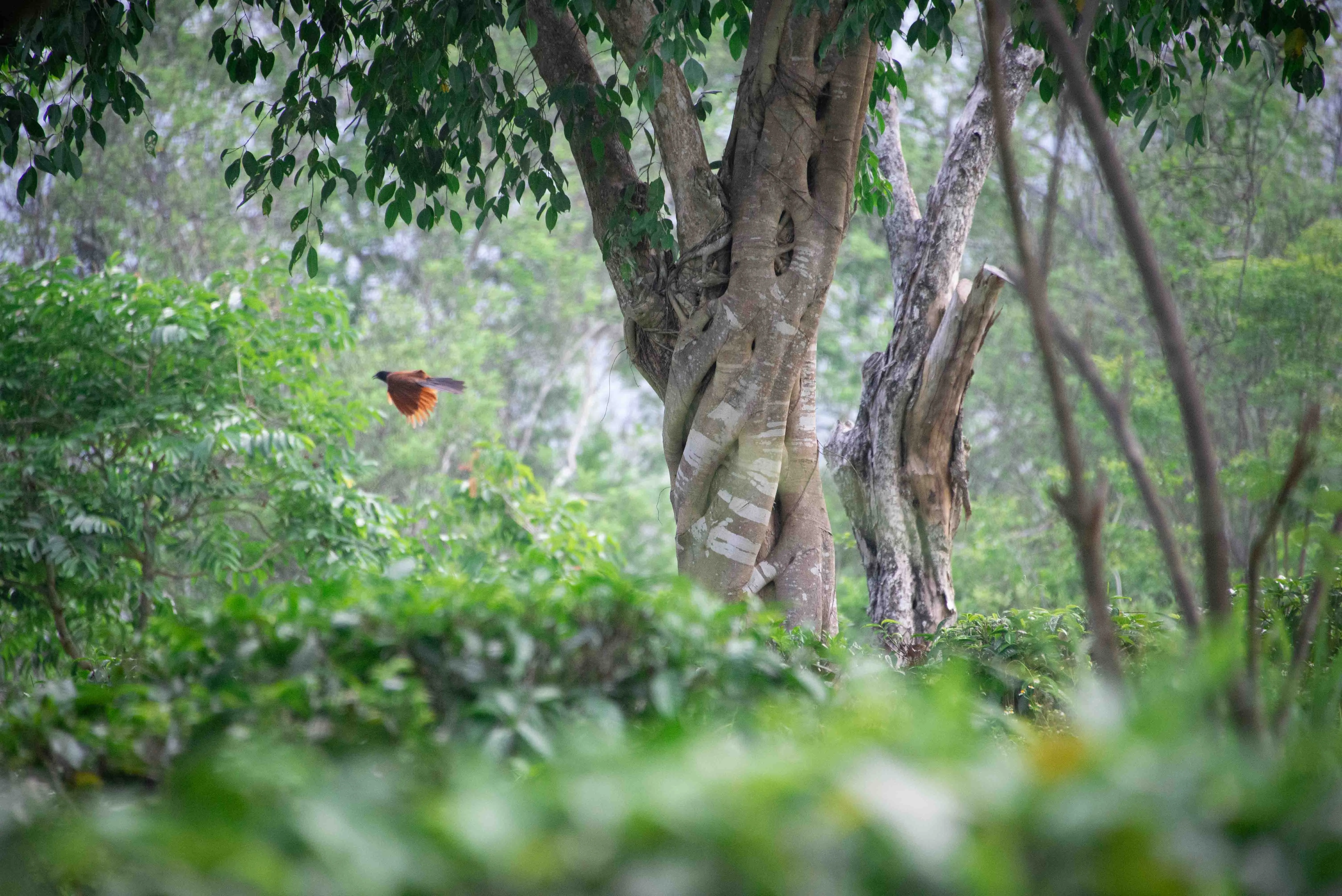
First, we focused on plant health. After cutting the trees to the right height, we began planting fruit trees and flowers around the tea to attract birds and bees for cross-pollination. This created an ecosystem that serves the tea and eliminates the need for pesticides.
Tea is very sensitive to flavor—it quickly absorbs the aromatic compounds from surrounding plants. The flowers we plant actually add flavor to our tea. Without a healthy surrounding environment, you can’t make good tea.
Robin: In Darjeeling, you pick at certain times of the year. Is it the same here?
Raju: In Darjeeling, we pick seasonally, but here we can harvest 10-11 months of the year. We give the plants rest during the driest period when water levels are low and roots search deeper for water. When I harvest leaves, I’m removing nitrogen from the plants. If they don’t have enough water to replenish nutrients, they could die. By not harvesting, they retain enough reserves to survive.
In tea, if you pluck 28-35 times per year from one plot, that’s considered average harvesting. More than 35 is over-harvesting; less than 28 is under-harvesting. I track every harvest and analyze what happens if we don’t reach the optimal number.
Robin: What tea plants do you have here?
Raju: We have Assamica and Taliensis, which is native to eastern Thailand. Taliensis is more aromatic and flavorful than pure Assamica. We harvest them together rather than separating them.
Robin: I noticed you make two white teas—one harvested at dawn and one at dusk—and they taste different.
Raju: Yes, even though we don’t get dew here, the morning is still cooler with some freshness on the tea. The “Arun” white tea picked in the morning is softer, more floral, and lighter. The “Sayan” white tea, picked in the afternoon when temperatures exceed 30°C, ferments more quickly because of the heat. We pick only the buds for white tea.
White tea is pure—just plucked and dried naturally with no processing. That’s why it’s called “white”—it’s like a virgin, untouched and undisturbed. Other teas go through transformation processes.
Robin: You’ve been here eight years now. How do you like living in Thailand?
Raju: I came here with a mission to make a name for myself in the tea industry. After establishing the plantation, the biggest test was making good tea. Then the challenge became letting people know about it. We entered tea competitions around the world, and people started recognizing and loving my tea. Winning awards was very motivating.
This place has become like my baby now—I feel too attached to leave. My family is still in Darjeeling, and they visit once a year. If you want to be successful in life, sometimes you have to make sacrifices. Everyone wants to be with family, but to do something extraordinary, you need to take a different path.
As they say, winners don’t do different things; they do things differently. Everyone makes good tea worldwide, but you have to push a little bit extra—work with the environment and take on challenges others won’t.
Robin: How has it been working with the local Thai people compared to India?
Raju: It was totally different, especially with the language barrier. When I first arrived, I spoke English, and they spoke Thai. Neither of us understood each other, but remarkably, they became so good at understanding my sign language that even if I just blink or twist my hand, they know what I mean. That’s why my Thai is still poor after eight years—they never forced me to learn it!
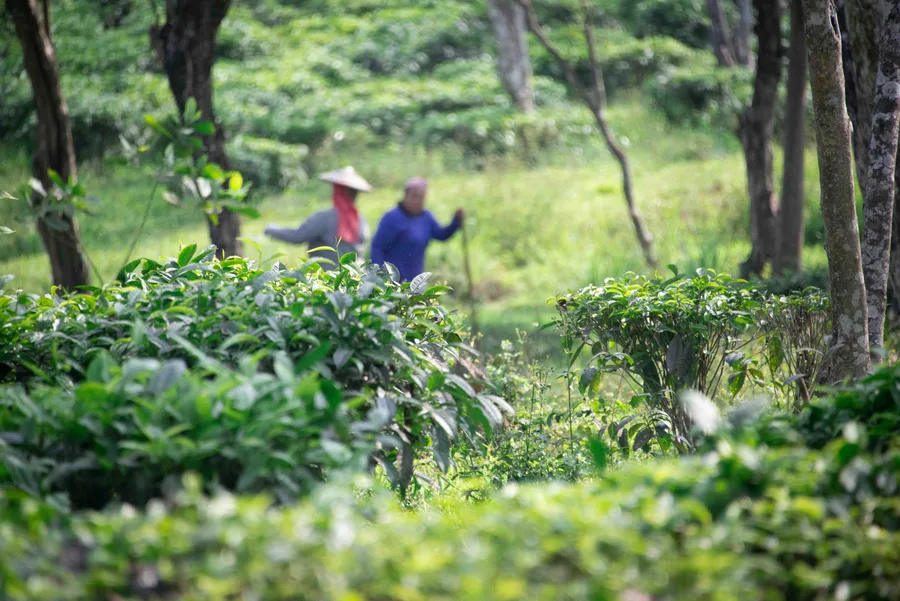
They’re very humble, hardworking people. They haven’t been exposed to tea culture, but we keep teaching them, and they’re learning. We employ mostly women because they’re more careful with the plants. If you’re focused on quality rather than volume, women are better harvesters.
Robin: How long do you see yourself staying here?
Raju: As I said, this has become my baby. I plan to work here until I retire, as long as the company wants me. We work as a family. Sometimes it gets monotonous here, but Kun Anne travels and brings back new knowledge. It’s interesting—she didn’t come from the tea world, but she became interested during COVID when she couldn’t go out. She would test the teas I sent her and analyze them.
Now she travels around the world, sees how others make tea, and brings fresh ideas. That’s how we keep improving. If you want to learn, you have to explore the world. She goes out, brings back new ideas, and we try them here. If they work, great—if not, that’s okay too. That’s how we continue to make innovative things.
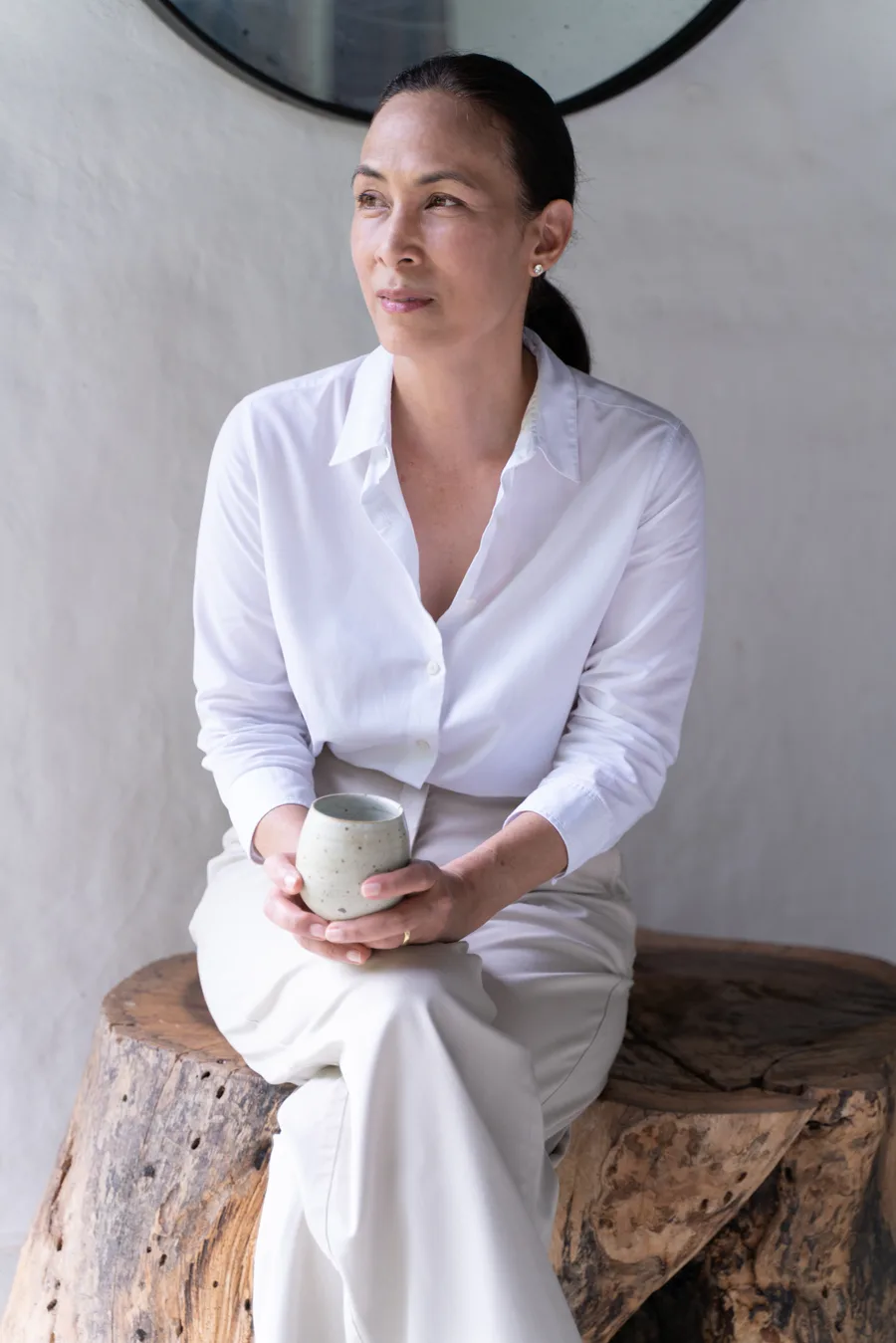
Anne
Robin: You are in the tourism industry since a while. What brought you to venture into tea?
Anne: I’m working in travel technologies, sustainable travels, and what used to called eco-tourism, which is my passion. I started 35 years ago in the Mae Taeng area where the tea garden is now located. We worked with local communities by setting up community banks where a fixed amount from each guest goes directly to them. Every activity, like village tours led by locals, creates income for the community. We’re not trying to take over businesses; we want locals to build their own sustainable livelihoods.
Robin: What brought you to purchase this tea estate?
Anne: I always drove past this land on my way to activities. I’d see these beautiful flowers that looked like cherry blossoms blooming in the dry season. I always commented on loving this piece of land, and one day it came up for sale.
When we visited, the place was a jungle with everything overgrown. I noticed plants that looked alike every two to three meters. A Lahu hill tribe lady told me they were tea plants. This was a tea garden formerly owned by a major Thai tea company but abandoned for 10-15 years. I wasn’t a tea drinker at all, but my husband was. The lady made some tea for us right there, and after tasting it, my husband said, “Let’s go into the tea business.” I resisted at first since I knew nothing about tea.
Robin: So you did some traveling to introduce yourself to the world of tea?
Anne: Yes, we explored tea gardens across Southeast Asia. We visited Sri Lanka, India multiple times, Taiwan, Japan, and China. Our last stop was Darjeeling, which is where we met Raju. I also took an online course to learn about tea – the chemical aspects, biological aspects, taste notes, and everything else. I also had a specialist from France come to Thailand to teach me sensory processes. For me, to succeed, one really needs to understand everything thoroughly.
Robin: How did you end up in Darjeeling specifically?
Anne: After tasting teas from Assam and Sri Lanka, I realized our tea had different characteristics. It has a lot of floral notes. I thought Darjeeling might produce something closer to what our tea could be. I visited many tea gardens there and stayed overnight at one with lodging. That’s where I met Raju. He was my tour guide.
Robin: What were the initial business challenges in reviving this forgotten tea estate?
Anne: The biggest challenge was that nobody knew us. In Thailand at that time, most tea came from Doi Mae Salong, and even jungle tea wasn’t that popular yet. For the first four years, we supplied our leaves to other producers before building our own factory.
I wanted to capture the unique aroma and character of our garden. Going organic from the beginning was part of our positioning, but it’s extremely costly to get certification. We use only organic fertilizers, which forced us to position ourselves as a premium tea.
After visiting tea gardens worldwide and seeing how much pesticide goes into commercial tea production, I knew I didn’t want to follow that path. I was shocked by the amount of chemicals being used in major tea-producing regions.
Robin: Thailand has a thriving specialty coffee culture. Do you think tea has the same potential to eventually go mainstream?
Anne: That’s difficult to answer. The majority of Thai people prefer strong flavors with sugar – like Thai tea or bubble tea. Even in our cuisine, we eat very strong flavors – spicy dishes, coconut milk, everything is very rich. Most people aren’t accustomed to appreciating the subtle nuances of quality tea.
I don’t think tea will reach the scale of coffee culture because coffee is so robust. However, I’ve seen growth in tea interest since after COVID. People are becoming more health-conscious and willing to explore different aromas and flavors.
Robin: Your tea has won several awards. How does international recognition like that work?
Anne: We look for competitions with transparent judging processes, particularly those that do blind testing. I like the European tea awards because they’re very transparent. Many tea competitions have specific regional categories like “Indian Black Tea” or “Sri Lankan Tea,” which is challenging for Thai producers because Thailand often isn’t included as a category. Globally, the tea world needs to be more inclusive. We carefully select which competitions to enter based on their openness to diverse tea origins.
Robin: Raju mentioned the plants and flowers intentionally planted around the plantation, the whole organic ecosystem preserved here… How important are these values of preservation and respect for traditions?
Anne: It’s the core of what I do. Preservation of nature, culture, tradition, and the well-being of everyone who works for us is essential. From day one, we’ve provided healthcare to all employees and pay fair wages regardless of position. I believe people should be able to work in their own communities, and we shouldn’t take advantage of them. Preservation isn’t just about the environment but also about people and their culture.
Robin: If you had one piece of advice for someone trying their luck in the tea business environment, what would it be?
Anne: You have to be true to your ideology and beliefs and carry it through. You need to be really passionate about it to make sure you don’t get distracted. If you stay committed, you will achieve your goal and recognition will come.